In a previous post I recalled seeing Eddie "Rochester" Anderson as a song-and-dance man. I've found the movie in question: Buck Benny Rides Again, a 1940 programmer that brought Jack Benny's radio cast, and its recurring mock-Western "Buck Benny" sketch, to the screen. The film is forgettable, except for this scene in which Eddie Anderson shows what a fine all-round performer he was. His partner is Theresa Harris.
Thursday, 16 February 2012

Thursday, 9 February 2012
My bathtub runneth over
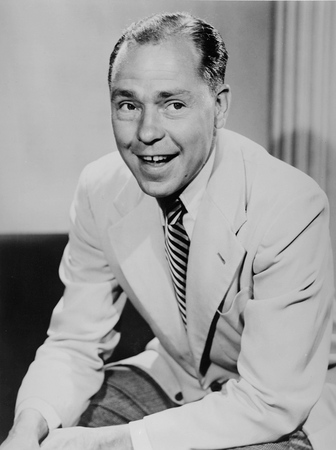
Lots of reasons to post this one: I love Johnny Mercer's lyrics, especially when Johnny Mercer is singing them. I love this song, The Bathtub Ran Over Again, in which he's abetted by Stirling Bose, cornet, Jack Teagarden, trombone, Fulton McGrath, piano, and Dick McDonough, guitar. Our friend Tina and my blogfather, the learned Dr. Steinmetz, love the song, too. One more reason to post it: to give you a smile this fine day.
Friday, 3 February 2012
The day Rochester and his friend Louis Armstrong got de-Morgenthau'ed
 |
| Jack Benny, Mary Livingstone, and Eddie "Rochester" Anderson |
Eddie Anderson was more than a skilled comedian. In movies such as Cabin in the Sky and Brewster's Millions he was also an actor of some subtlety, and in the movie Buck Benny Rides Again (1940), an adept song-and-dance man. During the heyday of Jack Benny's radio program in the 1940s, the character of Rochester, played by Anderson, was so popular that Benny paid him $100,000 a year, making him the highest-paid African-American actor. The relationship between the characters they played on the air was complex, groundbreaking, and just a touch subversive: Benny the stingy boss, but boss in name only; Rochester, in the tradition of Beaumarchais' Figaro and Wodehouse's Jeeves, the butler-valet who's always one step ahead of him, manipulating him at will, feeding his vanity even while mocking it. The following exchange is typical and exemplifies the "radio joke," one that depends on a non-visual medium for its surprise and punch:
ROCHESTER: Look, boss, I pressed your blue suit. How does it look?
BENNY: Fine. Now take it off and get back to work.
During World War Two, the shows often emanated from military bases. I've listened to them. The receptions given Rochester, marked by boisterous cheers, were usually louder than those accorded other cast members, even big-name guest stars. I believe the buck privates, the grunts, identified with the character, rooting him on as he found new ways to circumvent the High Command.
Benny and Anderson remained close, professionally and personally. When Benny trademarked the character-name Rochester, he sold Anderson the trademark for one dollar. In time Benny and his writers eliminated all jokes involving racial stereotypes. After the war, Benny would often end his broadcast with a statement denouncing racial prejudice.
Anderson invested wisely and eventually became quite wealthy. He was entrepreneurial. During the war he owned a parachute company selling to the army and navy, managed a boxer, and in 1943 became the first-ever African-American owner of a racehorse, named Burnt Cork, to run in the Kentucky Derby. Unfortunately Burnt Cork finished dead last.
Anderson invested wisely and eventually became quite wealthy. He was entrepreneurial. During the war he owned a parachute company selling to the army and navy, managed a boxer, and in 1943 became the first-ever African-American owner of a racehorse, named Burnt Cork, to run in the Kentucky Derby. Unfortunately Burnt Cork finished dead last.
 |
| Eddie Anderson and Burnt Cork |
As they occasionally did, Benny's writers wrote the real-life incident into the script the next week. I've excerpted about seven minutes from the May 9, 1943 program, playable below. Rochester has been away for two weeks, having attended the Derby in Louisville. Now back in Los Angeles, he and surprise guest Louis Armstrong are preparing to go out on a double date while lamenting their losing bets on Burnt Cork. Armstrong always handled dialogue well, as he demonstrates in this exchange:
ARMSTRONG: What are we gonna do for money tonight?
ROCHESTER: Satch, you got money.
ARMSTRONG: I had money, until that horse of yours de-Morgenthau'ed me.
Time out while I explain the topical joke. Henry Morgenthau Jr. was Secretary of the Treasury at the time, for years a well-known public figure in FDR's New Deal. It was his signature adorning all your folding green.
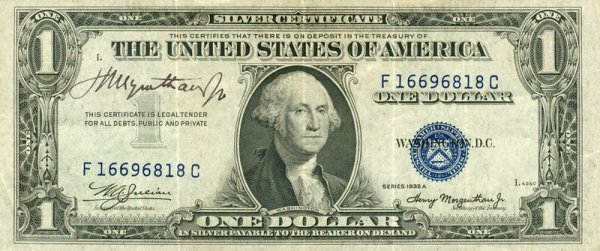
The point is, that's a difficult punchline, but Pops aces it and gets a huge laugh.
My excerpt ends with Armstrong singing and playing Lazy River. Unlike obscure references to Henry Morgenthau Jr., the music needs no explanation from anyone, and never will.

Thursday, 26 January 2012

Tuesday, 17 January 2012
TV before we had a TV: The Champ

By 1948 we still didn't have a TV set, but our next-door neighbor did.
On June 25, 1948, the aging heavyweight champion Joe Louis defended his title against Jersey Joe Walcott in a highly anticipated rematch. The previous December I'd been been listening on my bedside radio as Louis defeated Walcott in a controversial split decision at Madison Square Garden. "Controversial" is a kind word. It was a horrible decision, as is clear in the films. So convinced was Louis that he'd lost, so disgusted was the champion with his performance that he tried to leave the ring even before the decision was announced to resounding boos.
The June rematch at Yankee Stadium had originally been set for the middle of the week but was postponed twice by rain. Main events always began at ten o'clock, prohibitively late for a school night when a nine-year-old's bedtime was nine. But now it was taking place on a Friday, so at the last minute our neighbor invited Dad and me to come over and watch it. (I remember solemnly assuring Mom we would come home as soon as it was over, as if Dad and I might otherwise have gone out to a tavern with the boys for a post-fight bull session until one in the morning). Thus by happy meteorological circumstance and special parental dispensation, I got to see the big fight on TV -- a huge deal for me.
If you're put off by "the sweet science," as writer A.J. Liebling called it, you have my permission to skip the clip below, skip my pugilistic musings, and go directly to the musical dessert at the end of this post. Do not pass Go, do not collect $200.
As a kid well-schooled in my sports history, I knew the details of Joe Louis' legendary career, and his significance in twentieth-century American life. (On this subject I recommend David Margolick's Beyond Glory: Joe Louis vs. Max Schmeling, and a World on the Brink.) But to me, in 1948, Joe Louis was the overdog of overdogs; like Army, Notre Dame, and the Yankees, he always won. And since I always rooted for the underdog, I was fervently in Walcott's corner. To me justice demanded a Walcott victory, after he'd been robbed of the title so egregiously the previous December.
So on this June night I was thrilled and encouraged when Jersey Joe (in white trunks) dropped Louis in the third round with an overhand right, his third flash knockdown of Louis in two fights. (The overhand right was an old vulnerability of Louis', going back to the first Schmeling fight.) Following the knockdown, the contest settled into dull routine, drawing boos from the crowd for its lack of action in the middle rounds. Walcott, clearly ahead on points, was content to feint and box and keep his distance. Louis, a slow, heavy, rusty imitation of the Brown Bomber of the 1930s, stalked his shifty opponent patiently but was unable to nail him. It seemed a new champion was in the offing.
Then in the eleventh round, with a suddenness I was unprepared for, everything changed. I had listened to boxing on the radio and seen it in newsreels; I'd watched classic old fights on hand-cranked flip-book viewers in Coney Island penny arcades; but I'd never seen a bout live. To my untrained nine-year-old eyes, one minute my guy Walcott is outboxing the champ, building a solid lead through ten-and-a-half rounds, then a quick furious exchange and before I know it my guy is on the canvas being counted out, Louis triumphant again. I went home disappointed and bewildered that night, unable to grasp what I'd just witnessed on our neighbor's tiny TV screen.
What I'd just witnessed was Joe Louis' last great knockout -- one of his most remarkable, given his age and the circumstances, the circs being a reign of 11 years, 25 title defenses, one world war with its enforced absence from serious ring activity, and a clever, dangerous opponent.
As the eleventh round begins, at 3:36 on the clip, Walcott's body language reveals his confidence. After facing Louis for 25 rounds over two fights and winning most of them, he's convinced the over-the-hill champion cannot hurt him. By 4:31 Walcott has proceeded from confidence through over-confidence to cockiness, in the form of flashy head-feints, hand-feints, and sprightly footwork. For good measure, he connects with solid lefts at 4:40 and 4:43. Then at 4:47, in a gesture of defiance and disdain, Walcott does a little shuffle-step (adopted years later by Muhammad Ali and called the Ali Shuffle). Big mistake.
Jersey Joe was a veteran fighter but not quite old enough to remember a ring-wise wag named Herodotus, who said of hubris: "Seest thou how God with his lightning smites always the bigger animals, and will not suffer them to wax insolent." With his little shuffle-step Walcott was waxing insolent big-time, and sure enough, lightning struck: Louis catches him in mid-shuffle with a solid right hand to the whiskers. It's the punch that turns the fight. The stung Walcott responds by throwing his battle plan out the window and deciding to stand and trade punches with Louis. Bigger mistake.
Joe Louis has rightly been called the best finisher in boxing history; once he had an opponent in trouble, it was over. The impassive Louis never showed emotion in the ring, but you can see the moment when he spots his opening, when Walcott staggers just a wee bit from that right hand. It may be Louis' only opportunity of the night, and he doesn't waste it. For one last time in his career, the champ's finisher's instincts kick in and he summons the prodigious skills and technique of old, punching in combinations with a precision and power no other heavyweight could match. The contest is over within twenty seconds of Jersey Joe's ill-advised shuffle. No wonder I was one bewildered nine-year-old watching my first fight on TV - I was stunned that the end had come so suddenly, so quickly.
Ring justice was served that night, punishing Walcott for his insolence. In time, though, the deserving Jersey Joe, robbed of the title in his first fight with Louis, got his just reward, winning the heavyweight championship from Ezzard Charles in 1951, at age 37.
And now, because you've been such a patient reader, a musical treat: Joe Louis Stomp with the great trumpeter Bill Coleman, recorded in Paris in 1936 when the Brown Bomber was boxing's newest sensation. The tenor saxophonist-clarinetist is Edgar Courance, the guitarist Oscar Alemán.
Thursday, 12 January 2012
TV before we had a TV: The Catch

In the beginning, of course, there was no television. I grew up listening to radio shows, a lucky accident of timing for which I'm grateful. (For other readers raised on radio, I heartily recommend Gerald Nachman's book titled, coincidentally, Raised on Radio.) By the post-war 1940s, though, television was on its way. Everybody was talking about it. We kids could hardly wait for it, but by 1947 TV was still something other people had. Taverns had it, mainly so patrons could watch the fights. All we kids could do was watch longingly from the sidewalk, and wish.
The first two times I watched TV at other people's houses were both noteworthy events, I daresay historic, for a sports-crazy kid.
The first time was Sunday, October 5, 1947, game 6 of the World Series, Dodgers vs. Yankees at Yankee Stadium, Yankees leading three games to two. We were spending Sunday afternoon at my cousins' house in Flatbush. Normally, Sunday with relatives was not my favorite way to spend 50% of my precious weekend, especially when the extensive family was in plenary session. But this Sunday was different; these particular cousins had a TV set!
I can still see the scene: a darkened living room packed to capacity with assorted cousins, uncles, and aunts, all eyes fixed on the tiny screen. We were all Dodger fans, but not all equally attentive ones; I remember an unceasing buzz of crosstalk, mainly from aunts, through the entire game: "Anybody want leftovers?" "Move back! The TV can ruin your eyes!" "I already had seconds." "Anyone need seltzer?" "A light! There should be a light!" "You sure you're comfortable?" "We got leftovers!" Happily someone had the good sense to turn the radio on and the TV sound off, so at the game's crucial moment, even through the chatter, I could hear Red Barber's call of Al Gionfriddo's storied catch of Joe DiMaggio's 400-foot drive:
Hatten pitches -- swung on, belted -- -- it's a long one -- deep into left-center -- back goes Gionfriddo, back, back, back, back, back, back -- he makes a one-handed catch against the bullpen! Oh-ho, doctor!
This YouTube clip combines film of the catch with Red's radio call.
Until Willie Mays came along and made his spectacular catch of Vic Wertz' drive at the Polo Grounds seven years later, this was The Catch. It happened so fast it was just a blur on TV (no replays, of course). We didn't get a good fix on Gionfriddo's catch until we saw it in a newsreel days later. But It shows you how important the Dodgers were to us in those days: at the moment when Gionfriddo caught the ball and the victory was saved and my cousins' living room erupted in cheers, all anxieties about eyesight ruined, leftovers uneaten, and seltzer unspritzed were forgotten.
Tuesday, 3 January 2012
New Year's resolution for music critics

Repeat after me -- I will never again write anything resembling this:
... three and a half hours of intelligent groove, informed by jazz but rarely beholden to it, with improvisation as a binding but nonidiomatic force.
One piece began with a faintly samba-like invocation before clamping down on a vamp in quintuple meter.
....medium-tempo tension and dense contrapuntal cross-hatching....
As a sideman he has long been known for feverish disruption, lurching fast from one premise to the next. [This CD] established him as a bandleader-composer of calmer, more woozily immersive aims.
The songs were often abstracted, but "M__________," which closed the set, unfolded on deceptively simple terms: a quarter-note melody, played by Mr. S______ with sighing restraint, before an eventual onrush of distortion.
[The band] played a more variegated and simply thrilling set than either of the openers, delivering not only derivations of New Orleans funk... but also variations on spaghetti-western soundtracks, Middle Eastern music, retro faux-reggae and texture-mad free jazz.
[The bass'] strong masonry of tonic notes...
[The piano] would linger over melodic phrases in the song and then add a single banged note like an exclamation point; at other times he seemed to be meditatively walking away from the song, building chordal patterns that fragmented and dissipated as the rest of the band stayed on the watch.. He made the piano misbehave: it grew argumentative and disruptive; it mumbled and receded dramatically, like smoke after a shelling.
...sketching a three-note pattern over a seven-beat cycle [while] bass and drums struck up a crosscurrent, clattering and oblique...
I have no desire to embarrass any active practitioners, so these examples are not current; I've been saving them for a while. Let's hope that those whose writing is displayed above have since moved on to honest work, or else have enrolled in remedial courses in English composition.
Oh, yes -- classical reviewers, you're not exempt from this resolution. No more of this, please:
His playing fuses the aristocratic elegance of the 'golden age' with contemporary fastidiousness. In his hands fusty interpretive accretions built up over generations are peeled away to reveal pristine musical surfaces. Structures torn asunder by subjective whimsy regain their organic composure.
Fusing elegance with fastidiousness? This is praise? Is this reviewer getting paid by the syllable?
What a way to make a living. Thank goodness I'm just an enthusiast.
Subscribe to:
Posts (Atom)